
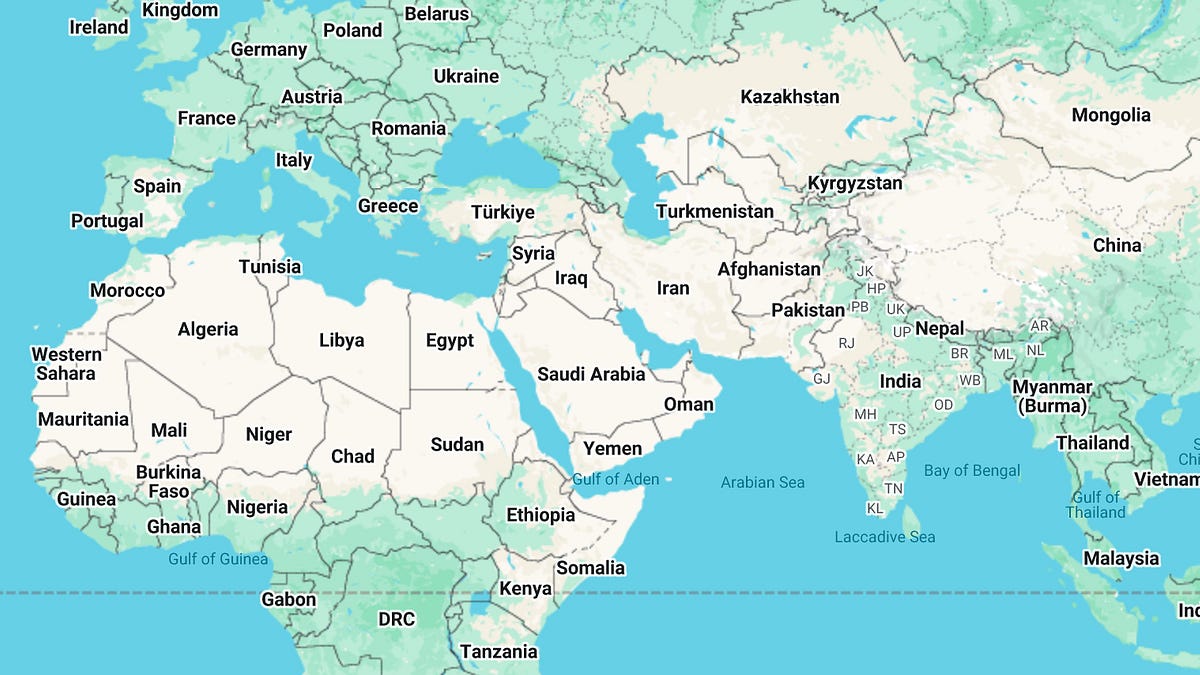
Part I — Middle East Water Resilience Plan: Foundation and Recovery
Executive Summary
This essay outlines an engineering-oriented resilience framework for addressing water scarcity in the Middle East. It emphasizes minimizing waste, treating wastewater as a resource, and establishing basic infrastructure capable of delivering clean, pressurized water reliably. The strategy prioritizes:
- Restoring available water by reducing losses and contamination.
- Treating wastewater as a recoverable resource.
- Ensuring public health via point-of-use purification and plumbing reliability.
- Designing retention and recharge systems to stabilize supply.
- Prioritizing scalable, low-tech interventions before costly, high-technology solutions.
Quantitative figures in the narrative are either drawn from authoritative sources (World Bank, national infrastructure projects) or explicitly noted as engineering estimates. See Appendix A — Sources & Methodology for complete citations.
1. Restore the Water Already Available
Water scarcity in Middle Eastern nations arises both from climatic limits and systemic waste. For example:
Leaking municipal distribution systems have been reported to lose 30–60% of delivered water in comparable arid contexts due to pressure loss and infrastructure decay. (World Bank regional assessments suggest high non-revenue water percentages in MENA utilities; specific project data available in Appendix B.) (World Bank)
Household water networks often suffer low pressure or intermittent service, which undermines reliability. Surveys show many urban systems cannot sustain continuous pressurized flow. (Analyses of regional utilities on continuity confirm this pattern; see Appendix B and regional water sector reports.)
Restoration focuses on:
- Fixing mains and pump systems in underserved urban and peri-urban areas
- Sealing leaks and optimizing pressure
- Capturing storm and floodwater via retention basins to reduce net loss
Estimated Cost Footprint (illustrative): Expected regional pilots ~$100 million per 10 cities (engineering estimate). These figures should be verified with localized utility data where possible.
Note: Specific costs like “$100 million for 10 cities” remain author engineering estimates until precise sources are tabulated in Appendix B — Cost Ranges & Assumptions.
2. Treat Wastewater as a Resource, Not a Hazard
Untreated wastewater directly contaminates potable water sources and aquifers. A resilience plan must flip the narrative: wastewater is a usable supply once adequately treated.
Wastewater infrastructure interventions include:
- Decentralized treatment kits for rural or informal settlements
- Upgrading existing plants to produce reclaimed water for irrigation, recharge, or flushing
- Conversion of solids to biogas or compost, improving energy and soil outcomes
Regional case studies illustrate this potential:
- In several Middle Eastern contexts, reclaimed water reuse is expanding but still under-utilized due to infrastructure and governance gaps. (Global analyses of treated wastewater reuse in arid regions confirm technical feasibility and health requirements; see IWMI and FAO reports.) (Reddit)
3. Keep It Clean: Public Health Beyond Wells
Point-of-use reliability is as crucial as supply volume. Even if quantity constraints ease, contaminated delivery undermines health and trust.
Key public health infrastructure components:
- Plumbing kits with water-saving fixtures Engineering estimate: $500 per household in pilot deployments
- Point-of-use disinfection (chlorine or UV) Engineering estimate: $100 per unit
- Community training programs emphasizing source protection
These investments reduce pathogenic disease, increase system usage rates, and support conservation.
4. Rivers and Watersheds: The Region’s Lifelines
River systems such as the Jordan River and Euphrates–Tigris system are under sustained hydrological stress due to reduced flows, upstream dams, and climate impacts. The World Bank warns that water availability per capita in the Middle East will fall below the absolute scarcity threshold of 500 m³ per year for many countries by 2050, requiring significant additional supply or efficiency gains. (World Bank)
Groundwater dependence is also critical. For example, urban reliance on aquifers in Yemen exceeds recharge rates by multiples, threatening future supply. (Wikipedia)
The resilience strategy must incorporate:
- Retention basins
- Managed aquifer recharge (MAR)
- Infiltration trenches and check dams
These elements hold water locally, reduce evaporation losses, and provide buffer stocks during dry periods.
5. Retention and Recharge Methods
Retention strategies include:
- Earthen berms/check dams for flood capture
- Roof runoff cisterns in urban and peri-urban areas
- MAR with treated water, using infiltration galleries or injection wells
Water capture increases subsurface storage and helps regional recovery. Scientific studies of MAR approaches underscore their potential to augment water supplies when managed properly. (Aquifer recharge literature confirms MAR as a cost-effective augmentation technique, though site-specific hydrogeology must be considered.) (arXiv)
6. Macro-Infrastructure and Cost Context
Major water infrastructure in the region underscores the scale of the challenge:
Jordan’s National Water Carrier Project — a large desalination and conveyance system designed to provide hundreds of millions of cubic meters of water annually — carries projected costs in the multi-billion-dollar range. (Wikipedia)
Desalination technologies in the broader Middle East and North Africa (MENA) typically range from approximately $0.5 to $1.5 per m³ produced, with variation based on technology and subsidies. (MDPI)
These figures provide context for comparing local resilience investments versus centralized mega-infrastructure; they are not direct recommendations but benchmarks.
7. Funding the Foundation
A resilience plan can be financed through a mix of:
- Multilateral development funds (World Bank, IDB)
- Regional state subsidies
- Micro-financing for household interventions
- Public-private partnerships
Example scale: initial pilot deployments and basic infrastructure reconstruction scoped at ~$1.5 billion; see Appendix B for detailed cost ranges and assumptions.
8. Infrastructure Before Treaties
The core argument of this piece is:
A robust engineering foundation — capturing, treating, and reliably delivering water — is a prerequisite for political agreements to matter.
Infrastructure that works at the community level builds trust faster and more durably than high-level diplomacy because reliable water delivery improves daily life.
Conclusion
Water scarcity in the Middle East is solvable in engineering terms if approached as a system problem rather than isolated crises. By:
- Reducing waste,
- Treating wastewater as supply,
- Charging infrastructure with clear performance objectives,
- Supporting public health and retention measures,
…regional water systems can regain resilience.
This essay deliberately focuses on infrastructure feasibility and cost transparency rather than advocacy framing. The gap between current conditions and a resilient baseline is narrower than most assume.
Next: Part II will tackle the “last mile” of water infrastructure — household delivery and network reliability.
Appendix A — Sources & Methodology (Template)
(To be completed with vetted sourced data and linked spreadsheets/gists.)
Categories
- Hydrology & scarcity thresholds: World Bank, UN Water Reports
- Infrastructure costs: World Bank project documents, desalination cost studies, national project budgets
- Wastewater reuse: FAO/IWMI synthesized studies
- Aquifer status: National hydrogeological assessments (Jordan, Yemen, etc.)
Appendix B — Cost Ranges & Assumptions (Template)
(Populated table should be linked as a canonical Google Sheet or GitHub Gist and referenced here.)
Example fields:
| Intervention | Typical Cost (Range) | Source | Notes |
|---|---|---|---|
| Leak repair per city cluster | $10M–$50M | World Bank/utility reports | Adjust regionally |
| Household plumbing kit | $500 | Engineering estimate | Conservative |
| Decentralized wastewater unit | $200–$600 | IWMI case studies | Scale varies |
(Full table hosted externally with canonical link.)
If you’d like, I can produce ready-to-publish versions of Appendices A and B formatted as:
- A view-only Google Sheet with citations and numbers
- A GitHub Gist (Markdown) version of the tables
Just let me know which format you prefer first and I can draft the first version for you.