
The Aquifer Restoration Manifesto
Groundwater collapse is not a resource problem. It is a system design problem.
Civilizations are quietly draining the largest freshwater reservoirs on Earth. Aquifers that took thousands of years to fill are being emptied in decades. Policy discussions focus on conservation and allocation — on managing a shrinking supply.
That framing is wrong.
The world is not running out of water. The world is running out of water infrastructure.
The Misdiagnosis
The oceans contain more than enough water to support civilization many times over. The problem is not the absence of water. The problem is the absence of infrastructure capable of moving and storing it where it is needed.
The evidence of mismanagement is visible everywhere. The Aral Sea, once the fourth largest lake on Earth, was largely destroyed within a single human lifetime. Iran's Lake Urmia has lost most of its surface area. Agricultural basins across Asia, the Middle East, and North America are subsiding as pore pressure falls. Wetlands vanish. Rivers lose baseflow.
These are not natural events. They are engineering failures — systems left unbuilt, or built in isolation from one another.
Civilization already possesses the technologies required to reverse this.
Desalination converts seawater to fresh water at industrial scale. Pipeline systems transport liquids across entire continents. Stormwater management captures and redirects large volumes of runoff. Managed aquifer recharge is already practiced in multiple regions.
The problem is that these systems have never been integrated.
Aquifers as Infrastructure
Beneath the continents lies the largest practical freshwater storage system available to humanity.
Aquifers are typically treated as finite deposits to be carefully depleted. They are better understood as hydrological reservoirs embedded within the lithosphere — enormous in capacity, negligible in evaporation losses, and distributed precisely beneath the regions where water demand is greatest.
The Ogallala Aquifer beneath the central United States is one of the largest freshwater bodies on Earth. It is being drained faster than rainfall can replenish it — not because replenishment is physically impossible, but because no infrastructure exists to accomplish it at scale.
If aquifers are infrastructure, the conclusion follows naturally: they can be restored and maintained.
The Planetary Aquifer Registry tracks depletion rates and recharge potential for the world's major aquifer systems. Planetary Aquifer Registry →
The Corridor Architecture
A coastal desalination plant, powered by co-located energy generation, produces fresh water at scale. That water travels inland through large-diameter transmission mains, reaching pumping stations every 100 kilometers. At the terminus, it enters managed recharge systems and descends into depleted aquifers.
That is the hydraulic mission. But it does not travel alone.
The same right-of-way carries a natural gas pipeline, high-voltage power transmission, automated rail freight, and a fiber communications backbone. Five systems. One corridor. The construction cost is shared. The vulnerabilities are distributed. The revenue streams are multiplied.
This is the Global Water–Energy–Transport Corridor — and its financial architecture is the reason it works where pure water projects have failed.
A single 500-kilometer corridor segment generates $561 million to $1.99 billion per year across five revenue streams. Water sales represent only 1 to 3 percent of that total. The debt is retired by energy and freight. Water is the social license — the smallest revenue stream and the most important one.
Capital is raised through hybrid Blue/Green Bonds on 20-year maturities. The corridor pays for itself. It asks nothing of charity.
Mutual Assured Prosperity
There is a second reason this architecture succeeds in difficult regions where isolated water projects fail.
When a corridor bundles water, power, rail, and communications into a single system, every stakeholder along its length depends on its continued operation. Disrupting the water main also disrupts the power grid, the freight network, and the communications backbone. Sabotage becomes economically self-destructive.
This is Mutual Assured Prosperity — MAP. Shared dependence on a corridor's revenue and utility creates an operational stability that no treaty or enforcement mechanism can replicate. The economics do the work that diplomacy cannot.
A warring state finds itself surrounded by neighbors with water security. The corridor doesn't cross your border. It doesn't have to.
Building water infrastructure in hostile or fragile regions is not naive. It is strategic. The first corridor that succeeds becomes the proof of concept that changes the calculation for every region watching.
The 1900 Baseline
The target is not an abstract engineering optimum. It is a known historical state.
The year 1900 represents the last moment of broad hydrological equilibrium before industrial-scale groundwater extraction began. Ghost rivers that have not flowed in a century. Dry lake basins that were living ecosystems within living memory. Coastal aquifers that once pushed the ocean back from the land's pores.
Restoring aquifer pressure to that baseline does not require imagination. It requires infrastructure.
As the water table rises, surface drainage reverses. Historical riverbeds begin to carry baseflow again. Wetlands reanimate. The trophic cascade that follows — insects, amphibians, migratory birds, apex predators — requires no mandate. It requires only water.
The sequestration of massive volumes inland also exerts a measurable brake on sea-level rise. Pressurized coastal aquifers form a hydraulic wall against saline intrusion. Coastlines stabilize. The geophysical dividends are real, and they are free — paid for by the energy and freight revenues that retire the corridor debt.
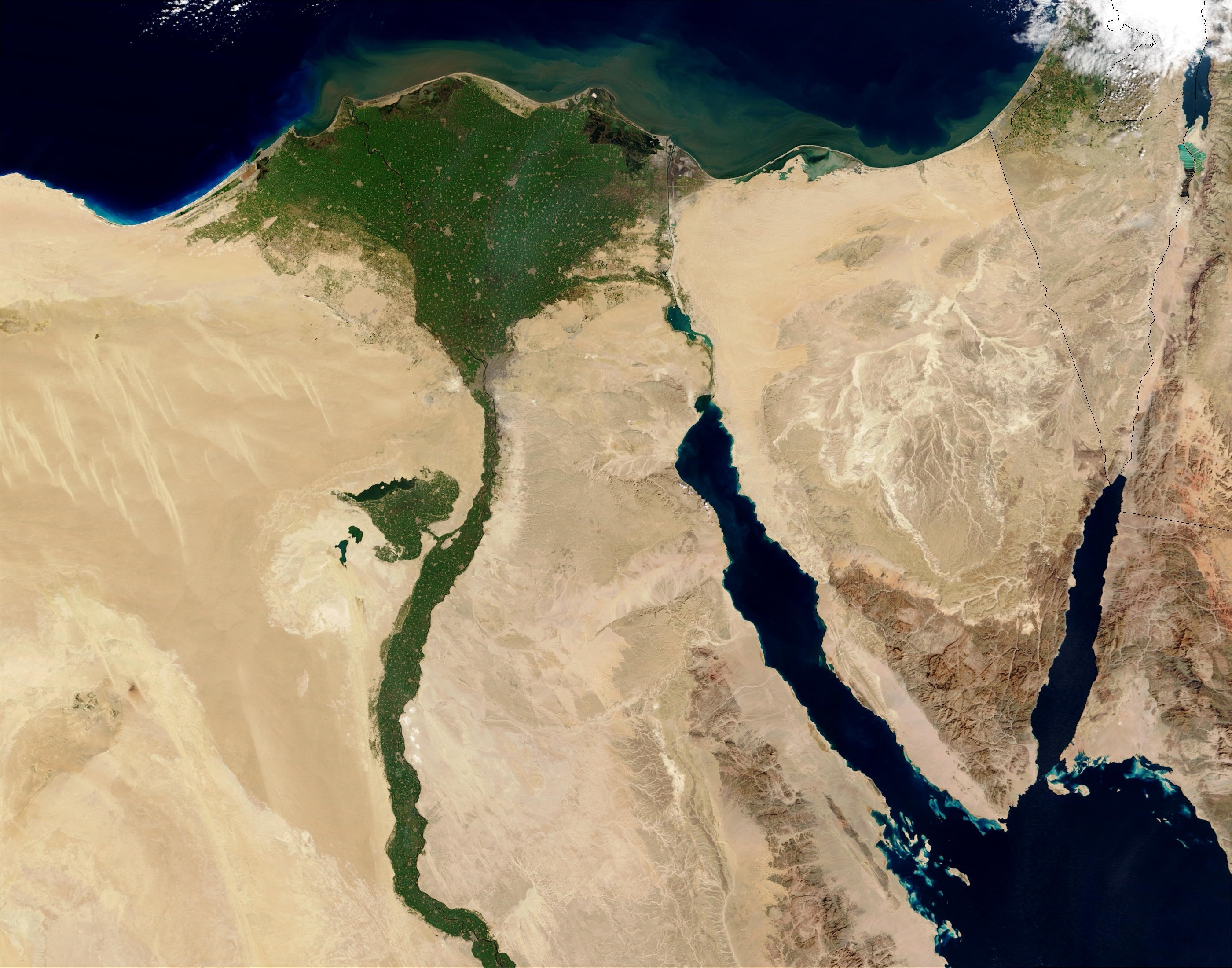
The series begins in the Middle East. The model that works in the world's most contested watersheds works anywhere.
Nations pay for infrastructure. The planet restores itself.
Groundwater collapse is not a resource problem.
It is a system design problem.
And system design problems can be solved.
Owen's Applied Thinking — owencorpening.substack.com